
Ask Claude Code
The plugin teaches Claude to plan an outside-in talk, lay the diagrams out cleanly and check its own work. Describe the system; get a deck. Make decks with Claude Code
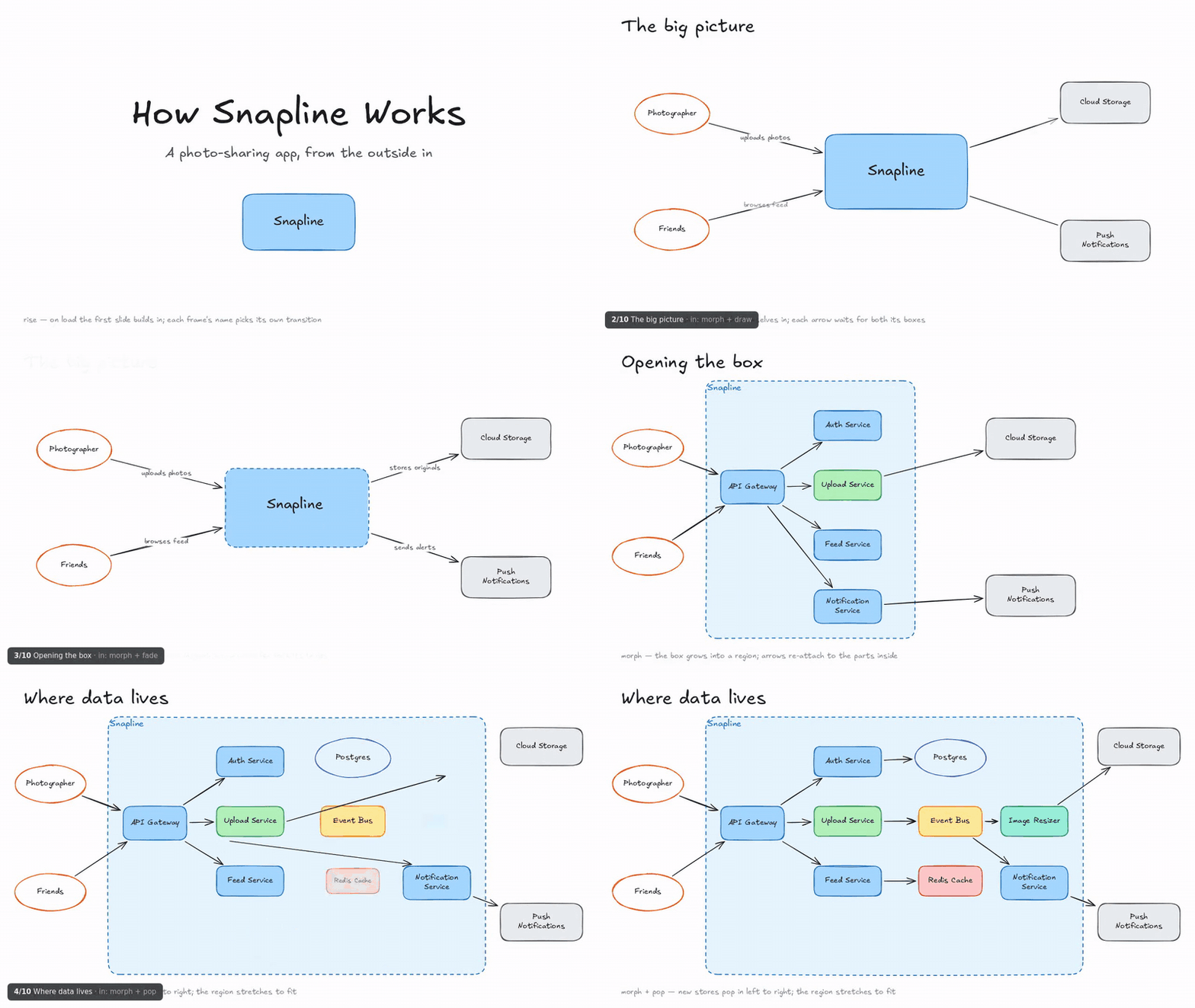
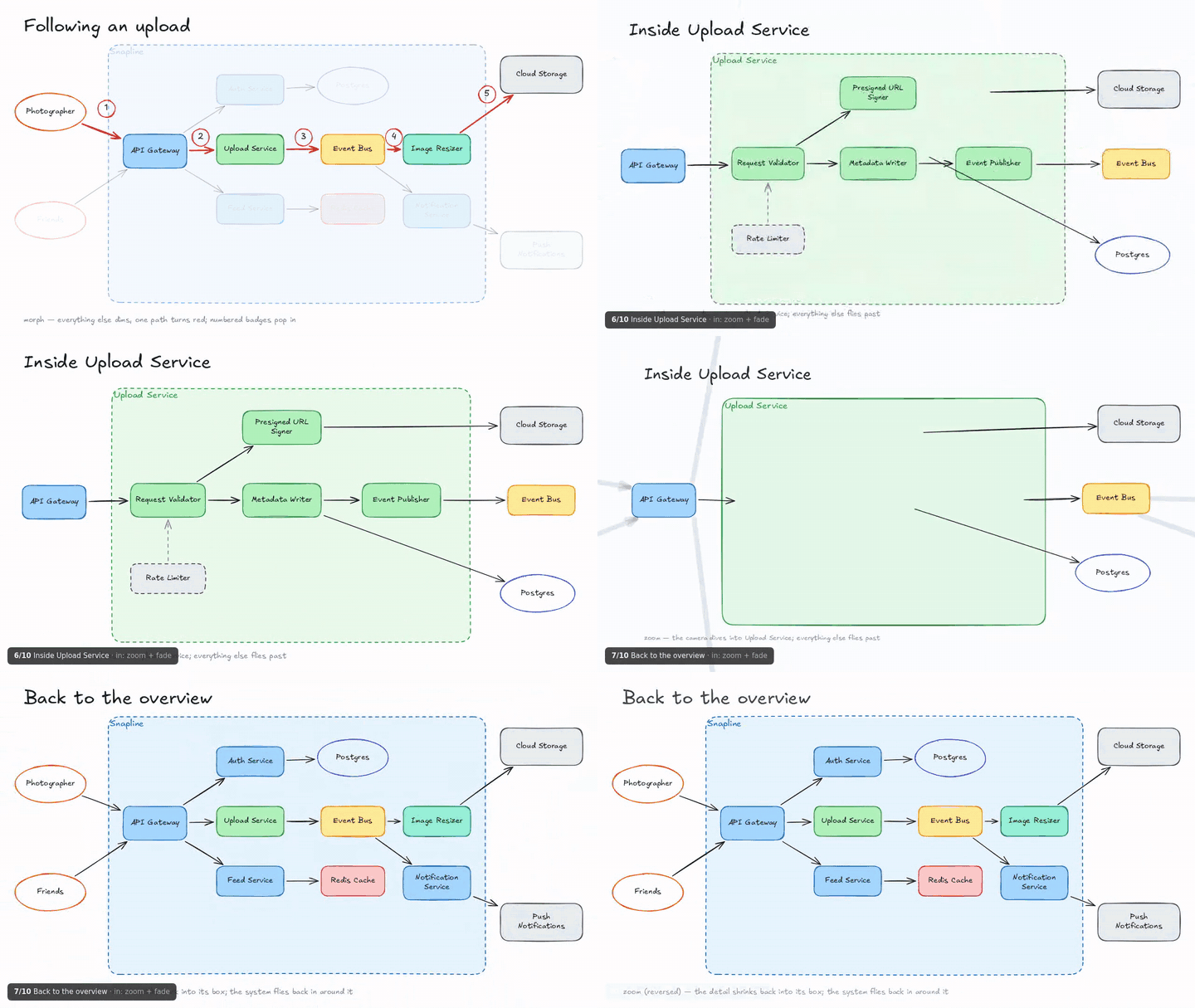
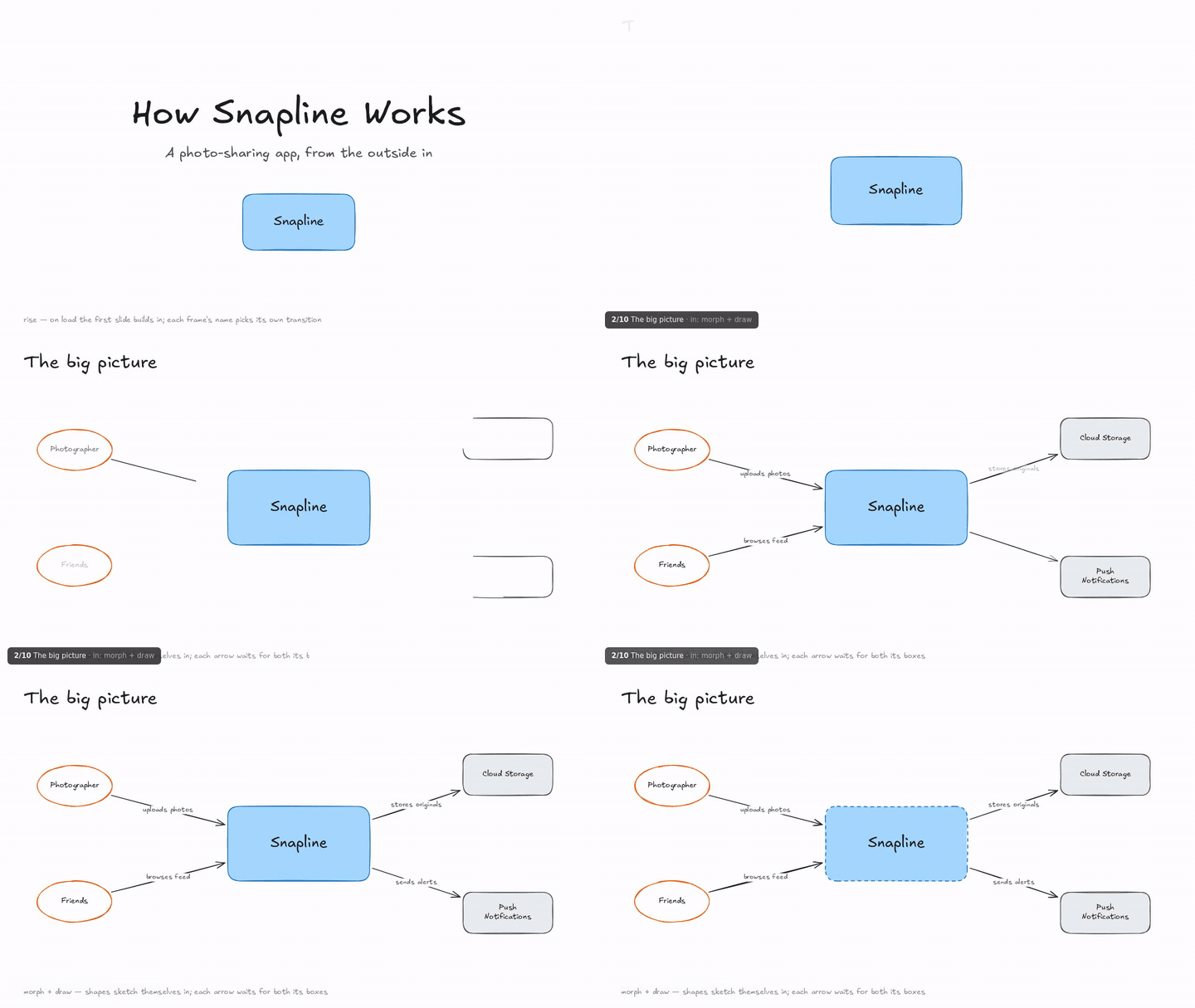
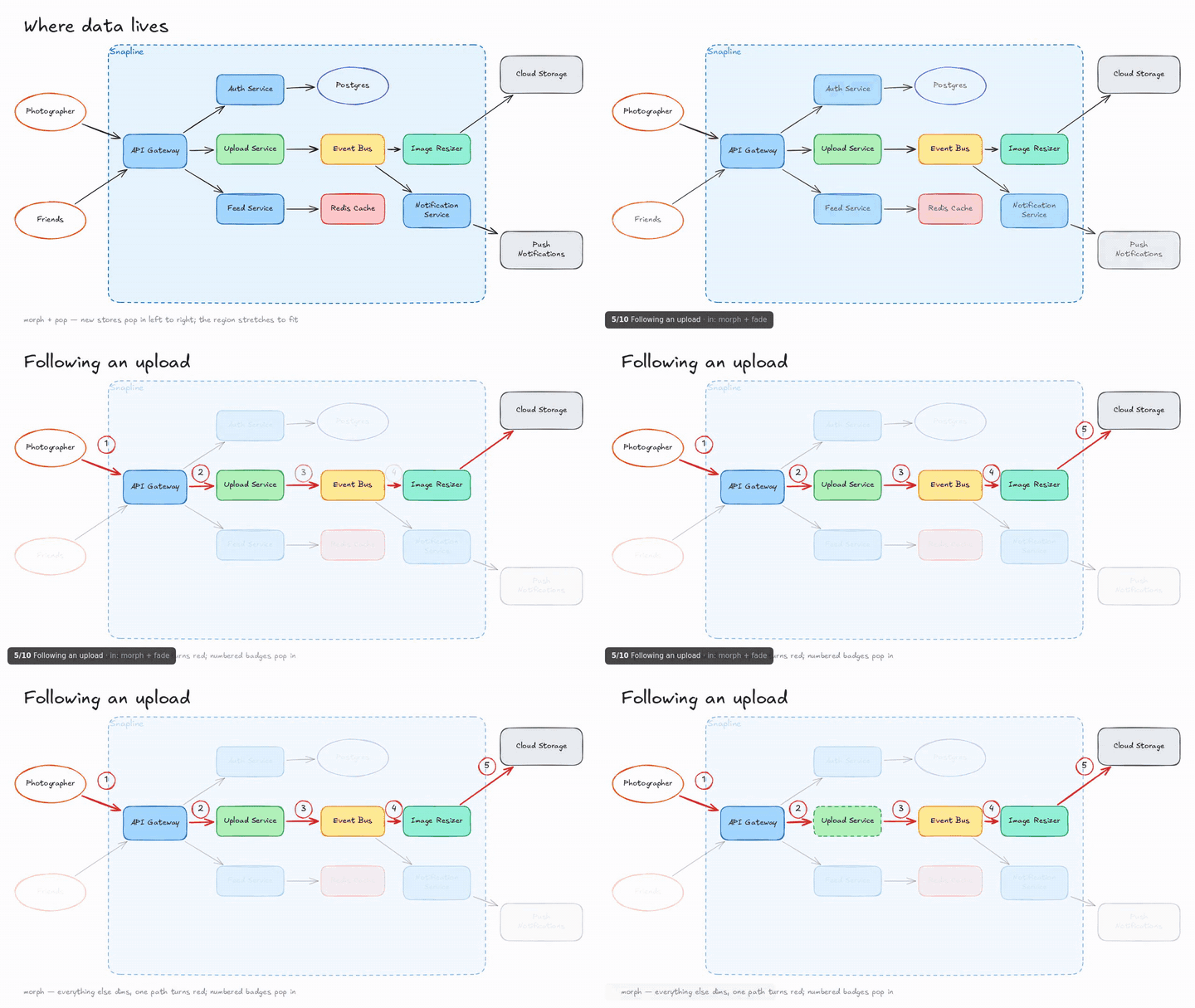
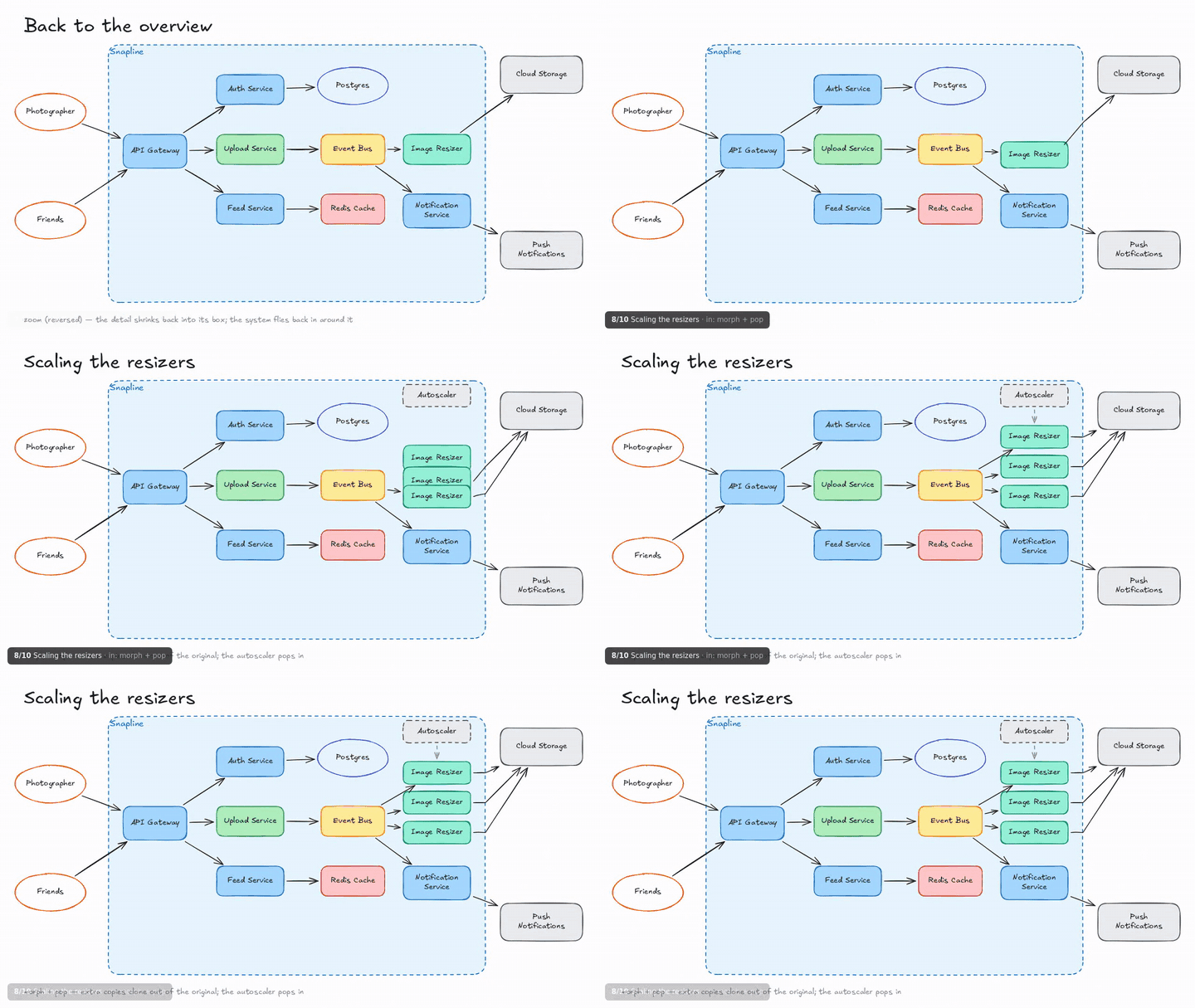
# present the example decknpx excalideck# present yoursnpx excalideck serve talk.excalidrawBoxes glide to new places, open up into the parts inside them, draw themselves in and clone out, and arrows stay
attached throughout. Every slide is a frame in one ordinary .excalidraw file, so you can still open and edit it at
excalidraw.com. excalideck works out which shapes on one slide are the same shapes on the
next, and animates the difference.
Ask Claude Code
The plugin teaches Claude to plan an outside-in talk, lay the diagrams out cleanly and check its own work. Describe the system; get a deck. Make decks with Claude Code
Draw it in Excalidraw
Draw each slide in a frame, duplicate the frame and change the copy. Tags in the frame’s name pick the transition. Make decks in Excalidraw
Write it as code
A short script with the builder library: boxes size themselves to their labels and arrows bind to them. The output is deterministic, so a talk lives in git. Write decks as code
Nothing leaves your machine
The builder, checker and player all run locally, and the hosted player reads a dropped file in your browser without uploading it. Fine for confidential architecture.